



Pine bark mulch during drought: practical soil protection
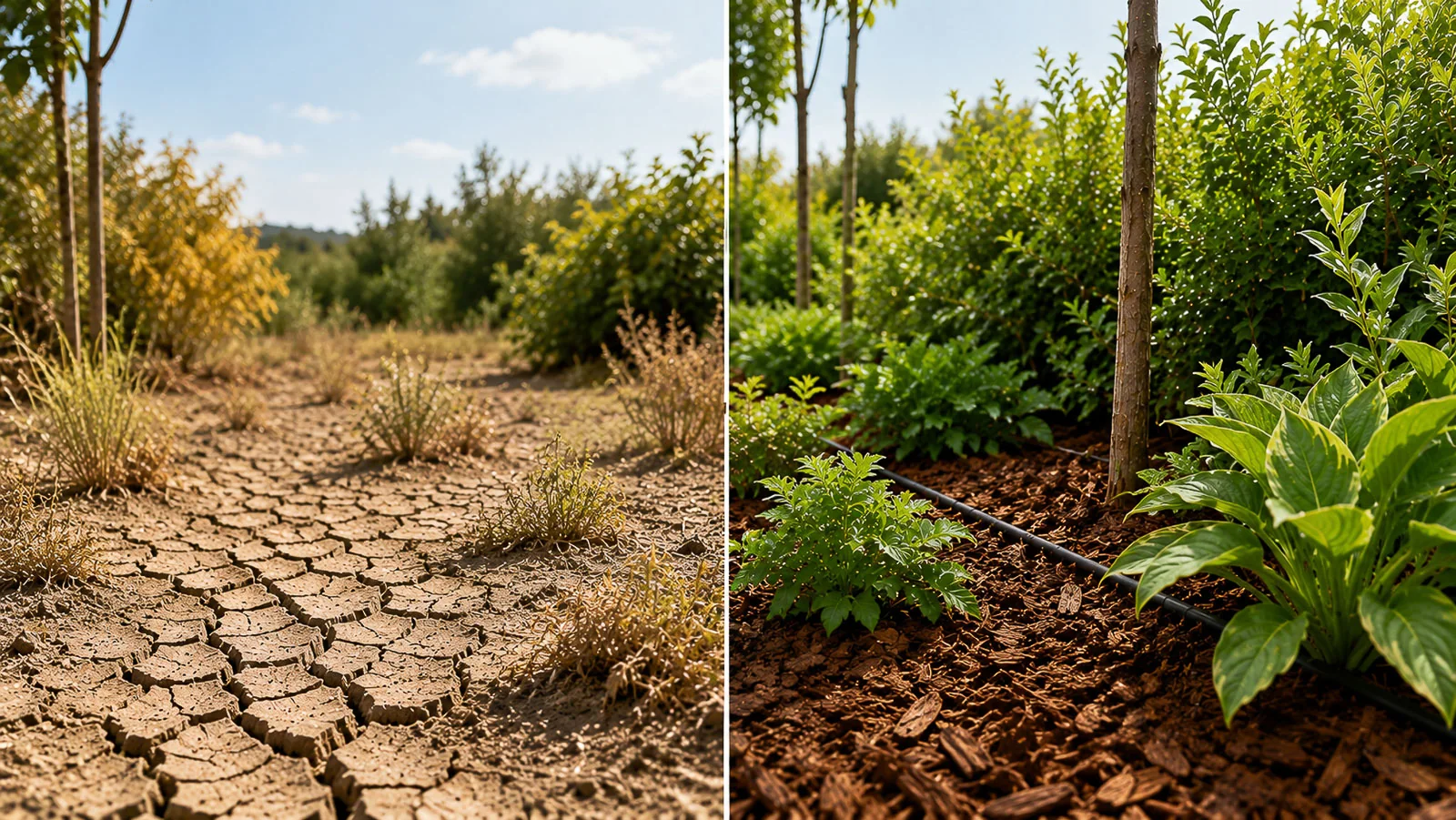
Long dry periods require more than extra watering. A stable mulch layer helps protect the upper soil, reduces direct heating and creates a more even environment around roots.
Prepare the soil first
Remove established weeds, loosen the surface and water thoroughly before spreading bark. Mulch helps retain moisture already present in the soil; it cannot compensate for completely dry ground.
Drip irrigation lines work best below the mulch, where water reaches the root zone with less surface loss.
Use an effective layer
A layer of about 5–8 cm is suitable for most ornamental beds. Less frequently disturbed park areas may require 8–10 cm. Leave a clear ring around stems and trunks to avoid persistent moisture against the plant.
Choose the right fraction
Fine and medium bark suits detailed beds and smaller plants. Coarser bark is visually stronger on larger areas and usually remains in place longer. Check the depth every year and top up thin areas.
Summary
Pine bark performs best as part of a complete routine: sound soil preparation, appropriate irrigation and regular maintenance.